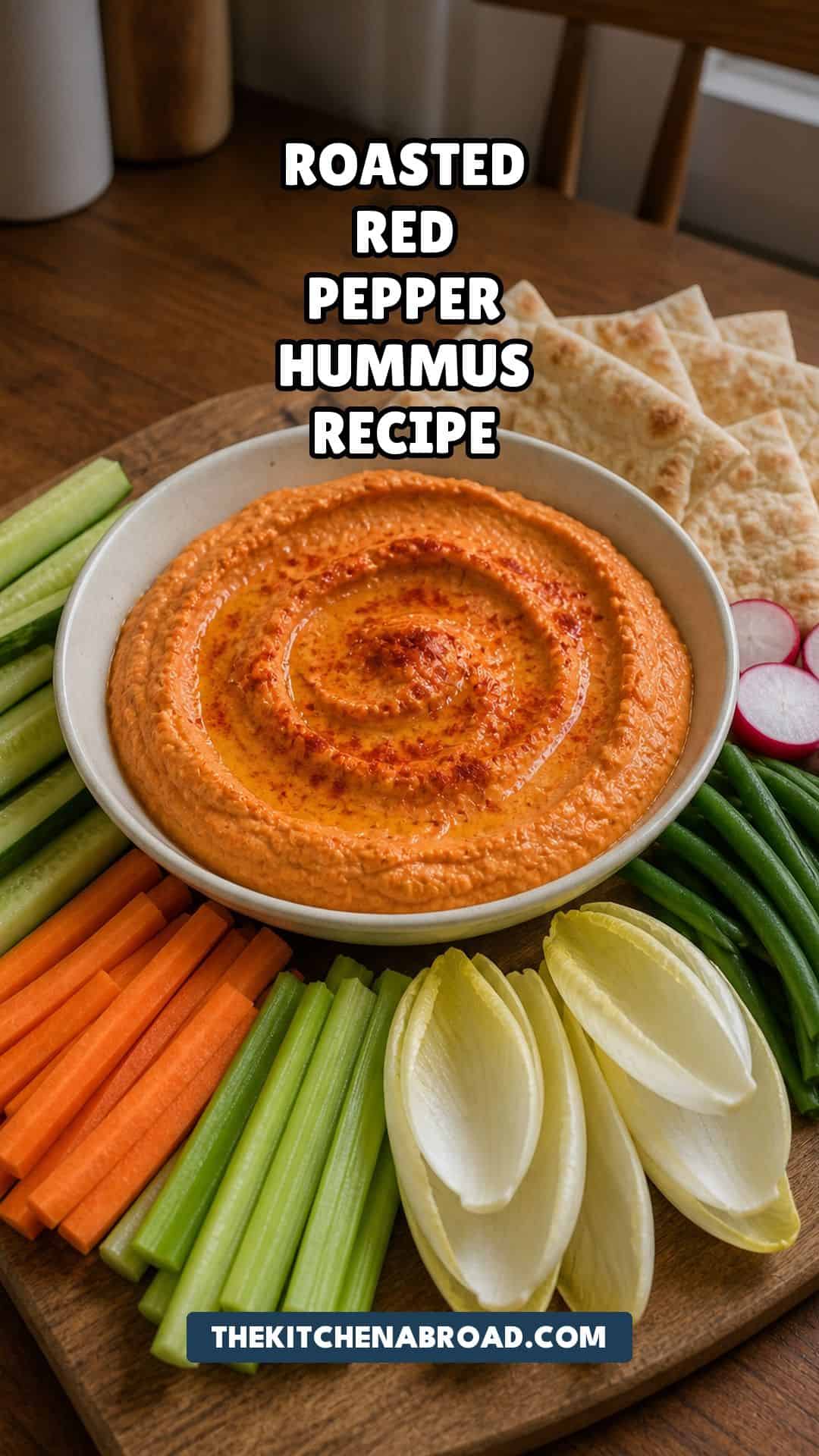
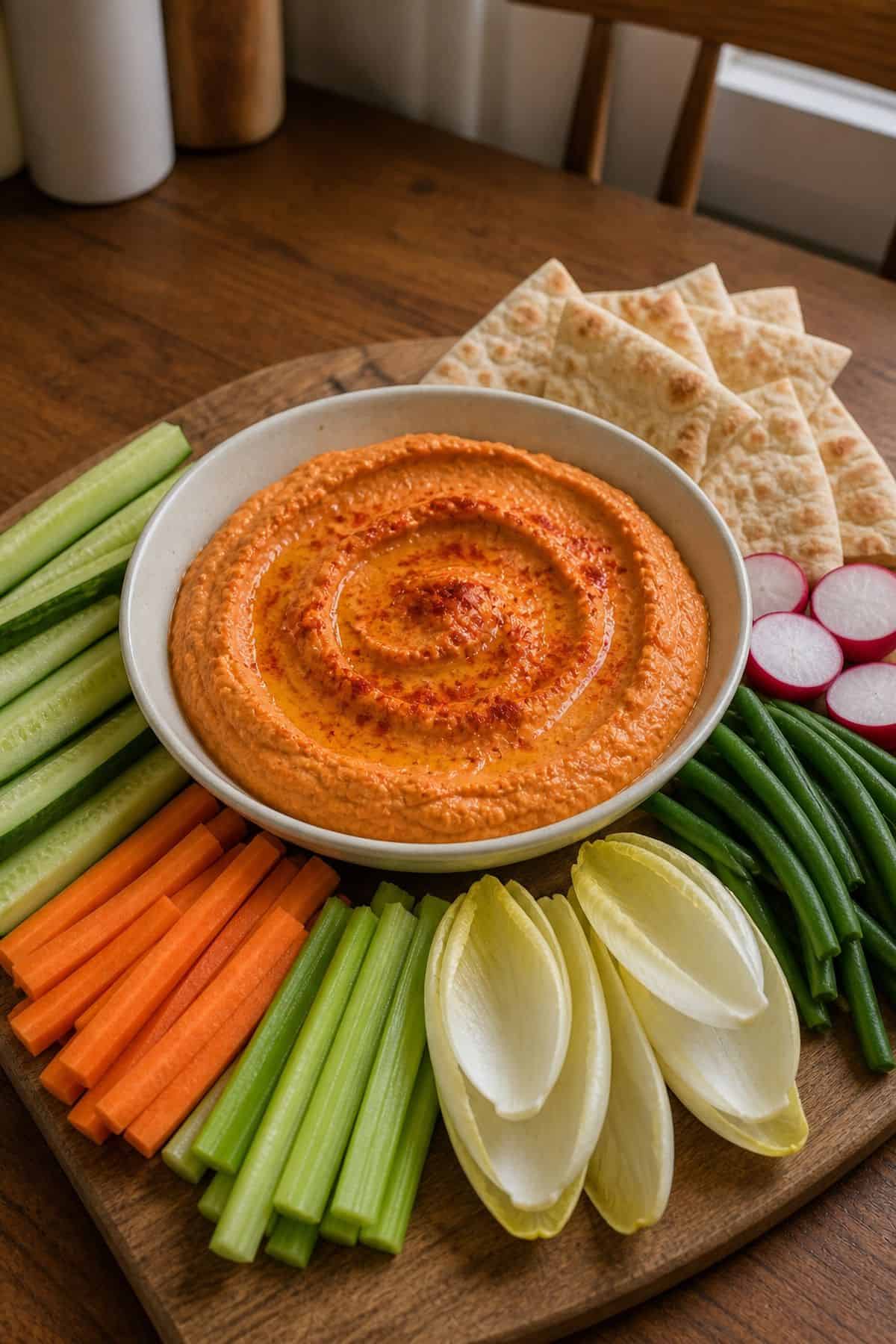
Roasted red pepper hummus is a Levantine chickpea dip blended with tahini, lemon, garlic, and charred sweet red peppers. The texture move is whipping tahini and lemon together first, with one ice cube, until the mixture goes pale and aerated before any chickpea hits the bowl. Serve it in a wide shallow dish on a wood board with cucumber spears, carrot batons, endive leaves, and warm pita.
Hummus is Levantine. Chickpeas, tahini, lemon, garlic, with the earliest written recipes traced to 13th-century Syrian cookbooks. The roasted-pepper version is a Mediterranean riff on the original, with charred sweet peppers folded in until the dip goes coral-red and faintly smoky. The texture move that separates a restaurant hummus from a grainy home batch is whipping the tahini and lemon together first, until the mixture is pale and aerated, before any chickpea joins the bowl.
Gear That Helps Here
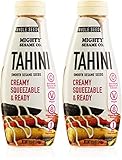
The food processor is non-negotiable. A blender will not produce the same coat-the-spoon texture, no matter how long you run it. Beyond that, a sheet pan for broiling fresh peppers, a stable mixing bowl for the steaming step that loosens the skins, a sharp chef’s knife for the crudité prep, and a wood board to serve the whole thing on as a passing platter.




Recommended Reads
- Best Christmas Finger Foods
- Friendsgiving Food Ideas
- Friendsgiving Potluck Ideas
- Easy Galentine’s Party Food Ideas
- Christmas Snack Ideas
Where Roasted Red Pepper Hummus Came From
Hummus bi tahina, the plain version, sits in the 13th-century Kitab al-Tabikh and a 14th-century Egyptian cookbook called Kanz al-Fawa’id. Both are dishes of cooked chickpeas pounded with sesame paste, lemon, garlic, and olive oil. Levantine cooks across what are now Lebanon, Syria, Palestine, Israel, and Jordan claim the dish, and the claims are old enough that no one wins the argument.
The roasted-red-pepper variant is newer. Greek, Turkish, and Israeli kitchens through the 20th century built it from kapia and romano peppers charred over open flame, sometimes folded into the dip whole, sometimes blended smooth. It crossed into American Mediterranean-restaurant menus in the 1990s and stayed because a coral-pink dip on a holiday table photographs the way the plain version does not.
What makes a roasted-pepper hummus distinct from a generic dip is the smoke. Whether the peppers come off a gas burner, a sheet pan under a broiler, or out of a jar, the char carries through and meets the tahini on the back of the palate. Without that smoke, the dip is just a pink chickpea spread.
Why the Tahini Goes In First
Tahini and lemon, processed alone, form an emulsion the same way mayonnaise does. The lemon juice and a splash of ice-cold water aerate the sesame paste until it stiffens, lightens in color, and turns almost mousse-like. Two minutes is enough; the mixture should look paler than the tahini you started with and hold a soft peak when the spatula lifts off.
When the chickpeas and peppers join an already-emulsified base, every chickpea gets coated evenly and the dip blends smooth in under a minute. Dump everything in together and the tahini grabs at the chickpea fragments instead, leaving the dip grainy no matter how long the motor runs. The ice cube does two jobs at once: it loosens the consistency without watering it down, and the cold forces the emulsion to set up faster.
A Few Notes on the Ingredients
The tahini matters more than the chickpeas. A bitter, separated tahini will give a bitter, separated hummus. Look for a brand where the oil pours off cleanly and the paste tastes nutty rather than chalky. Soom, Seed + Mill, and Mighty Sesame are reliable; supermarket private-label tahini varies. Stir the jar before measuring because the oil settles on top and the solids pack at the bottom.
For the peppers, jarred and fresh-roasted both work, with a real trade. Fresh peppers blistered under a broiler taste sweeter, smokier, and a touch more vegetal. Jarred peppers are faster, a bit saltier, and slightly vinegar-toned because they sit in brine. If you have 30 minutes and a sheet pan, roast fresh. If you have 30 seconds and a tight party schedule, jarred is honest.
Canned chickpeas save time without much penalty if you boil them with a quarter teaspoon of baking soda for ten minutes before blending. The baking soda softens the chickpea skins enough that the food processor can break them down. Dried chickpeas soaked overnight give a slightly creamier result and a cleaner flavor, but on a holiday party schedule the canned route is the one most home cooks reach for.
Recipe: Roasted Red Pepper Hummus with Veggies
Prep time: 15 minutes | Cook time: 15 minutes | Total time: 30 minutes | Serves: 8
Ingredients
- 2 medium red bell peppers (about 400 g / 14 oz), or 200 g (7 oz) jarred roasted red peppers, drained
- 1 can (425 g / 15 oz) chickpeas, drained and rinsed
- 1/4 tsp baking soda
- 120 g (1/2 cup) tahini, well stirred
- 60 ml (1/4 cup) fresh lemon juice, from about 2 lemons
- 1 ice cube
- 2 small garlic cloves, peeled
- 1 tsp fine sea salt, plus more to taste
- 1/2 tsp ground cumin
- 1/4 tsp smoked paprika, plus more for serving
- 30 ml (2 Tbsp) extra-virgin olive oil, plus more for drizzling
- 1 English cucumber, cut into spears
- 4 medium carrots, cut into 8 cm (3 inch) batons
- 4 celery stalks, cut into 8 cm (3 inch) sticks
- 2 Belgian endives, leaves separated
- 225 g (8 oz) green beans, blanched 90 seconds and shocked in ice water
- 8 radishes, halved
- Warm pita triangles, for serving
Instructions
- If roasting fresh peppers, heat the broiler to high and place a rack 15 cm (6 inches) below it. Halve the bell peppers, pull out the seeds and stems, and arrange skin-side up on a half-sheet pan. Broil 8 to 12 minutes, watching closely, until the skins are blackened and blistered across most of the surface. Transfer to a bowl, cover with a plate or plastic wrap, and steam 10 minutes. The trapped heat will loosen the skins. When cool enough to handle, peel off the blackened skins with your fingers; do not rinse, you will lose flavor.
- While the peppers steam, bring 500 ml (2 cups) of water to a boil in a small saucepan. Add the drained chickpeas and 1/4 teaspoon baking soda. Simmer 10 minutes, until the skins begin to slough off and the chickpeas feel soft when pinched. Drain and set aside. This step is the difference between grainy and smooth.
- In the bowl of a food processor, combine 120 g (1/2 cup) tahini, 60 ml (1/4 cup) lemon juice, the ice cube, and 1/2 teaspoon of the salt. Process for a full 2 minutes, stopping once to scrape down. The mixture will go pale, thick, and almost mousse-like, with the texture of a loose buttercream. This is the emulsion that makes the rest work.
- Add the warm chickpeas, the peeled roasted peppers (or drained jarred peppers), the garlic, the remaining 1/2 teaspoon salt, cumin, and smoked paprika. Process for 60 to 90 seconds. The dip should be smooth, even, and coral-pink. If it tightens up, stream in 1 to 2 tablespoons of cold water through the feed tube while the motor runs.
- Taste. Adjust with more salt, more lemon, or a pinch more smoked paprika. Stream in the 30 ml (2 Tbsp) olive oil with the motor running for a final 30 seconds to round out the texture.
- Spoon the hummus into a wide shallow bowl. Use the back of a spoon to swirl a shallow well in the center and a few grooves around the edges. Drizzle generously with olive oil so it pools in the swirl, then dust with extra smoked paprika.
- Set the bowl on a wood serving board. Arrange the cucumber spears, carrot batons, celery sticks, endive leaves, blanched green beans, and halved radishes around the bowl in tight clusters by color. Tuck the warm pita triangles into the empty spaces.
Notes
The hummus keeps 4 to 5 days covered in the fridge. The color shifts in the first 24 hours from bright coral to a softer pink-orange as the carotenoids in the peppers oxidize. The flavor stays. If you are serving for guests, either blend a fresh batch the morning of, or swirl in an extra pinch of smoked paprika and an extra drizzle of olive oil right before passing it out.
If the dip feels too tight after refrigerating, beat in a tablespoon of cold water by hand with a spoon. Avoid the urge to reprocess; running the motor a second time can break the emulsion and make the texture chalky.
For a fresh-pepper batch, the broiler step is faster than oven roasting and produces more char in less time. A gas burner with the pepper held with tongs over the open flame is even faster (about 5 minutes per pepper, turning), but you will need to vent the kitchen.
Tips and Variations
Smooth versus rustic, and when each is right
Smooth hummus, the kind that takes the back-of-the-spoon swirl, needs the full tahini emulsion and the full chickpea boil with baking soda. It is the version for a passing platter or a polished holiday tray. Rustic hummus skips the baking soda step and runs 30 seconds shorter in the processor; the texture is more chickpea-forward and works as a sandwich spread or a casual weeknight dip. Pick the texture by use-case, not by default.
Build the veggie tray for sturdiness, not variety
Crudités that go limp in a wet dip ruin the visual at hour two of a party. Cucumber spears hold; cucumber coins flop. Blanched green beans hold; raw green beans break teeth. Radish halves, carrot batons, celery sticks, endive leaves, sliced bell pepper, and romaine hearts cut lengthwise into spears are all sturdy, low-moisture, and easy to grip. Avoid sliced tomatoes, soft lettuce leaves, and cucumber rounds.
The dietary cross-stack
The dip is naturally vegan, gluten-free, dairy-free, and nut-free in one shot. At a holiday party with mixed dietary needs, this is the bowl that answers four problems at once. Swap the pita for gluten-free crackers or stick with the veggies if a guest is celiac, and you have not had to make a second dish. Worth pairing with a spinach and artichoke dip for the cheese-lovers to keep both ends of the table happy.
Spicier, smokier, brighter
Add half a roasted Fresno or a teaspoon of Aleppo pepper for heat that builds slowly without overpowering the tahini. For more smoke, swap the smoked paprika for chipotle powder, or stir in a tablespoon of harissa at the end. For brighter, add the zest of half a lemon along with the juice, and a tablespoon of finely chopped flat-leaf parsley to the swirl on top.
Storage and how the color fades
Refrigerate in an airtight container with a thin layer of olive oil on top, 4 to 5 days. The color fades from coral to pink-orange over the first 24 hours; this is normal pigment oxidation, not spoilage. The dip does not freeze well, because tahini-based emulsions break when thawed and the texture turns grainy. Make a fresh batch instead of freezing leftovers.
Serving on a Holiday Tray
The dip is the centerpiece of a grazing board built around it. Set the wide shallow bowl off-center on a wood board, with the crudités fanned in tight color clusters around the side and the warm pita tucked into the gaps. Fresh herbs (a few mint leaves, parsley sprigs) at the corners cover the negative space. For a fuller Christmas or Friendsgiving spread, run this alongside a cheese and charcuterie board so guests can graze across both.
For drink pairings, a chilled high-acid white cuts the tahini fat cleanly. Albariño or Vermentino are both reliable. A pomegranate-rosemary spritz on the bitter-sweet side meets the smoky pepper without fighting the lemon. If a cocktail is the move, a French 75 leans on bubbles and citrus to do the same acid-meets-fat work.
For the tahini, see what tahini is; to start from dried chickpeas, see how to boil chickpeas.
Frequently Asked Questions
Can I use jarred roasted red peppers instead of roasting my own?
Yes, with a small trade. Jarred peppers save 30 minutes of broiling and steaming, but the dip will taste a touch saltier and slightly more vinegar-forward because the peppers sit in brine. Drain them well and pat dry before blending. For a holiday party, jarred is honest and nobody at the table will guess.
How do I make roasted red pepper hummus smooth and creamy?
Three moves stacked together: boil the chickpeas with a quarter teaspoon of baking soda for ten minutes to soften the skins, process the tahini and lemon with one ice cube alone for two full minutes before anything else goes in, then run the processor a full 90 seconds with the chickpeas and peppers added. Skip any of these and the dip lands rustic, not smooth.
How long does roasted red pepper hummus keep in the fridge?
Four to five days in an airtight container with a thin film of olive oil on top to slow oxidation. The color fades from coral to pink-orange after the first 24 hours, which is a pigment change in the peppers, not a spoilage cue. The flavor holds the full window.
Can I make this hummus ahead of a party?
Up to 48 hours ahead. The texture holds, and the flavor actually improves slightly as the garlic and cumin settle. The catch is the color fade. For a polished holiday tray, blend the morning of, or swirl in an extra pinch of smoked paprika and a fresh drizzle of olive oil right before serving to refresh the visual.
What vegetables go best with roasted red pepper hummus?
Sturdy, low-moisture, easy to grip: cucumber spears (not coins), carrot batons, celery sticks, endive leaves, blanched green beans, radish halves, sliced bell pepper, and romaine hearts cut lengthwise. Avoid sliced tomatoes, soft lettuces, and cucumber rounds; they go limp and look tired by hour two of a party.
Key Takeaways
- Roasted red pepper hummus is a Levantine chickpea dip with a 20th-century Mediterranean roasted-pepper variant.
- Whip the tahini, lemon, and one ice cube for 2 minutes alone before adding chickpeas and peppers; this is the smooth-texture move.
- Boil the chickpeas with 1/4 tsp baking soda for 10 minutes to break down the skins.
- Jarred peppers save 30 minutes but taste a touch saltier and more vinegar-forward than fresh-broiled.
- The dip keeps 4 to 5 days; color fades from coral to pink-orange in the first 24 hours and does not signal spoilage.
- Crudités that hold: cucumber spears, carrot batons, celery, endive, blanched green beans, radish halves.
Final Thoughts
This is the bowl that earns its place on a holiday tray by doing more than one job. It is vegan, gluten-free, dairy-free, and nut-free, which means at a party with a mixed table it covers four dietary corners without anyone having to ask. The coral color photographs the way the plain version never does, and the smoky pepper hits a note next to a glass of cold white that few dips reach.
Build the platter as a centerpiece, not an afterthought. Wide shallow bowl, swirled with the back of a spoon, drizzled with oil, dusted with paprika, set on a wood board with the crudités in tight clusters by color. This is a make-ahead dip with a real make-ahead caveat: the color softens by the morning after, so refresh the visual with an extra drizzle and pinch of paprika before passing it out. For a fuller spread, run it next to a Friendsgiving dinner party menu and you have a tray that holds the room for the first hour.
The dip does not freeze, the dip does not last a week, and the dip does not improve with a blender swap. Those are the three honest constraints. Inside them, this is one of the few party recipes that scales cleanly, prepares ahead, and still looks composed at hour three.
Last update on 2026-10-15 / Affiliate links / Images from Amazon Product Advertising API