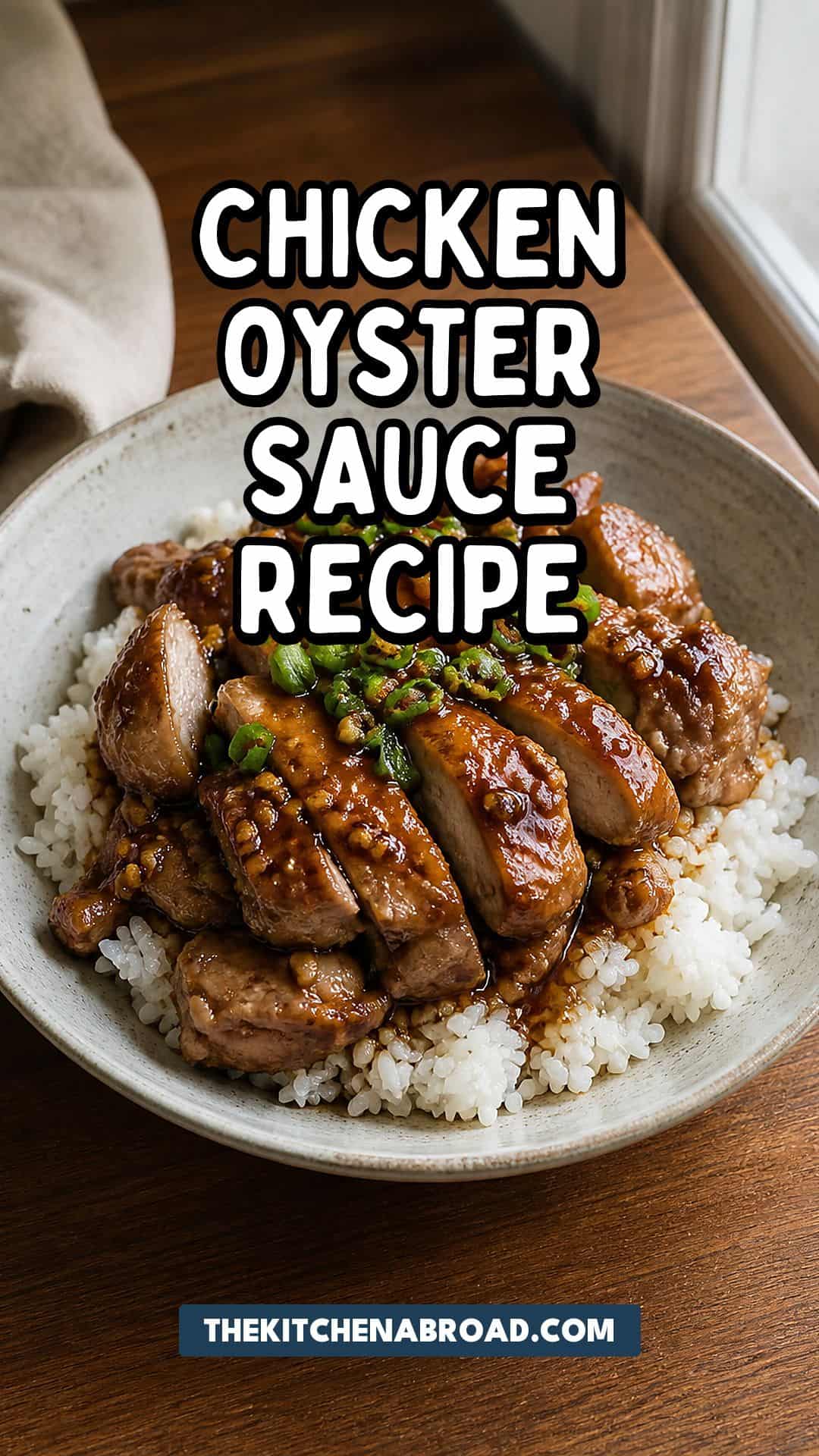
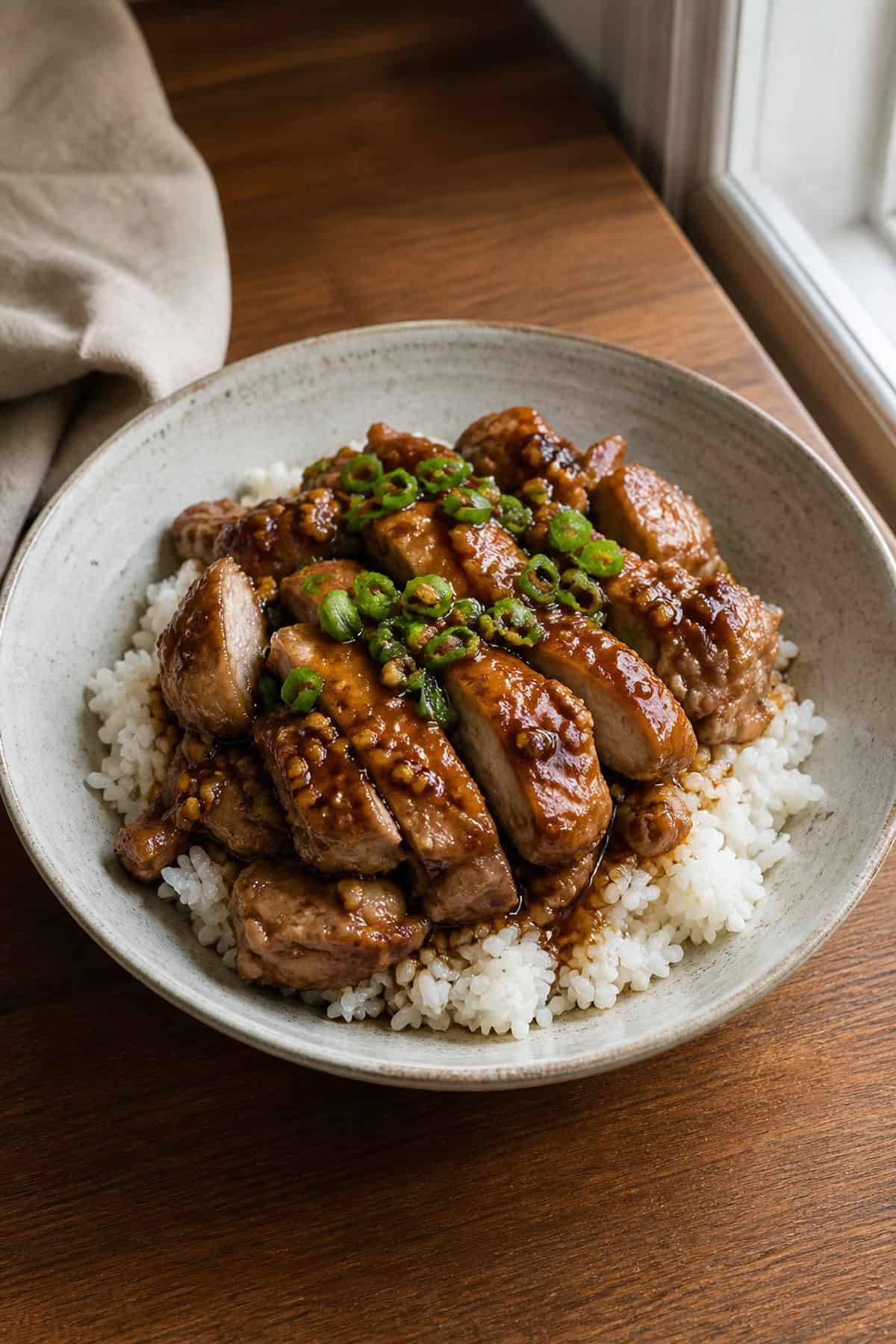
Chicken with oyster sauce built around the Cantonese velveting technique: 1.5 pounds of boneless skinless thigh sliced thin across the grain, marinated for 15 minutes in a slurry of egg white, cornstarch, Shaoxing wine, and salt (the home version of the restaurant move), then pre-fried 60 seconds in a screaming-hot wok to set the coating and pulled off heat. Aromatics , garlic, ginger, scallion whites , get a 30-second toast, the oyster-sauce glaze hits the wok, a cornstarch slurry brings it to gloss, the chicken goes back in for a 30-second toss, and a finishing drizzle of toasted sesame oil with scallion greens lands the dish. Total time 33 minutes, serves four over jasmine rice, restaurant-tender at a Tuesday-night cost.
The reason takeout chicken is silkier than the chicken you cook at home has a name, and the name is velveting , the Cantonese cornstarch-and-egg-white marinade that wraps each sliced piece in a protective protein gel before it ever touches the wok. It is the move every Chinese restaurant uses and almost no home cook bothers with, and it is the entire difference between chewy stir-fry chicken and the shiny, just-set, silk-coated bite you remember from the takeout container. The recipe below is the 30-minute weeknight version: thin-sliced thigh, a 15-minute marinade rest while you mix the sauce, a pre-fry to set the coating, and a fast finish in oyster sauce. If you want the no-marinade speed run, our quick and easy chicken stir fry is the 15-minute version with a generic soy-garlic glaze. This one is the technique post. Velveting plus oyster sauce, on a Tuesday, under 35 minutes start to finish.
What You’ll Need
A 14-inch carbon-steel wok with the kind of heat retention that can handle a high-flame stir-fry without dropping temperature the second the chicken hits the surface , non-stick will not get you there, and stainless heats unevenly. A bottle of Lee Kum Kee Premium Oyster Sauce, the brand Lee Kum Sheung’s family invented in Guangdong in 1888 when an oyster soup over-reduced into a dark, savory paste , it is still the benchmark for what oyster sauce should taste like. A bottle of Shaoxing wine for the velveting marinade and the back-note Chinese restaurants build their sauces around. A box of cornstarch , you will use it twice in this recipe, once for the marinade coating and once for the finishing slurry, and a 1-pound box will carry you through the full five-post series. And a long-handled stainless-steel wok spatula (a chuan) for the proper tossing motion against the round bottom of the wok. None of these are optional. The wok and the spatula are the chassis; the cornstarch and the Shaoxing are the technique.


Recommended Reads
- Mushroom with Oyster Sauce
- Noodles in Oyster Sauce
- Beef in Oyster Sauce
- Bok Choy with Oyster Sauce
- Quick and Easy Chicken Stir Fry
Where Velveting Came From
Velveting , jiu yim, 走油, in the Cantonese kitchens that invented it , is a restaurant move first. It was built on the wok lines of Guangdong as a way to handle the brutal heat of a professional burner without overcooking the protein. Slice the chicken thin, coat it in a slurry of egg white and cornstarch and Shaoxing wine, rest it briefly to let the proteins relax, then pre-fry it in a vat of warm oil (the restaurant version, called passing through oil) for under a minute just to set the coating. The chicken comes out opaque on the outside, still tender on the inside, and gets pulled to wait while the sauce is built. When the toss happens, the velveted coating shields the meat from the wok’s dry heat and locks in moisture , the result is the silk-coated, almost-bouncy texture that every Chinese restaurant chicken dish shares and no home stir-fry seems to reach.
The home version is the same technique scaled down. Instead of a vat of oil, you pre-fry in a thin film at the bottom of the wok , two tablespoons, hot enough to smoke, the chicken in a single layer for 60 seconds undisturbed, then 90 seconds of toss until just-cooked-through. The marinade ratios are the same: one egg white, two tablespoons of cornstarch, a tablespoon of Shaoxing, and a half-teaspoon of salt per pound and a half of sliced chicken. The rest is the same too , 15 minutes in the fridge while you mix the sauce and prep the aromatics. What you give up versus the restaurant version is the volume of oil; what you keep is the texture, which is the entire point. Lee Kum Sheung’s oyster sauce, invented in 1888 in Nanshui when he forgot a pot of oyster soup on the fire and watched it reduce into a dark, shiny paste, is the sauce this technique was built around. Together they are the engine behind half the American-Chinese takeout menu. Doing both at home takes 33 minutes.
A Few Notes on the Ingredients
- Boneless skinless chicken thighs: Thigh is the more forgiving cut for a first velveting attempt , the slightly higher fat content tolerates the 60-second pre-fry and the 30-second finishing toss without drying out, and the deeper flavor stands up to the dark soy and oyster sauce without disappearing. Breast works too if that is what is in the fridge, and the velveting marinade matters more for breast than thigh because there is less fat to keep it juicy. Slice across the grain at a quarter-inch in 1.5-to-2-inch pieces; thinner than that and the coating shears off, thicker than that and the pre-fry undercooks the center.
- Oyster sauce: Lee Kum Kee Premium is the benchmark , the family that invented oyster sauce in 1888 still makes the most reliable version. The label says “Premium” for a reason; the regular (non-Premium) line uses less actual oyster extract and reads thinner on the palate. Megachef and Maekrua are competent backups if Lee Kum Kee is sold out. Despite the name, properly cooked oyster sauce does not taste fishy , it reads as deep umami with mild sweetness, closer to a thicker, savorier soy than to seafood.
- Shaoxing wine: A fortified Chinese rice wine that adds the back-note Chinese restaurant sauces are built around. It does double duty here , a tablespoon goes into the velveting marinade where its mild acidity helps relax the muscle fibers and tenderize the chicken, and a splash can go into the sauce for depth. Dry sherry is the closest Western substitute if Shaoxing is not in your store; do not use cooking wine sold in the soy-sauce aisle, which is over-salted and harsh.
- Cornstarch: The velveting workhorse, used twice. Two tablespoons goes into the marinade, where it hydrates against the chicken’s surface and forms a smooth gel that locks in moisture during the pre-fry. A second teaspoon goes into the finishing slurry with a tablespoon of water , that is what brings the sauce to that signature shiny, clinging texture. A 1-pound box is the right size; potato starch or tapioca starch will work in a pinch but the texture lands slightly different.
- Egg white: Just one, separated from a large egg. This is the marinade silk , the protein coagulates into a thin protective film during the pre-fry that shields the chicken from the wok’s dry heat. You can skip it (replace with an extra tablespoon of cornstarch and a tablespoon of water) and land at maybe 80 percent of the texture, but the egg white is what takes velveting from good to restaurant-good. Save the yolk for fried rice the next day.
- Neutral high-heat oil: Peanut, grapeseed, or refined avocado oil , anything with a smoke point above 450°F. The pre-fry happens at high heat in the wok and olive oil will smoke and turn bitter long before the chicken hits the right surface temperature. Two tablespoons for the pre-fry, one tablespoon for the aromatic step; three total, divided.
- Aromatics trinity: Garlic, ginger, and scallion is the Cantonese aromatic base , three cloves of garlic minced, an inch of fresh ginger minced, and four scallions sliced with whites and greens kept separate. The whites go in early with the garlic and ginger for the 30-second toast that scents the oil; the greens go in off heat at the end as a fresh herbal finish. Pre-minced jarred garlic is the wrong move here; the burnt-edge flavor it carries reads loud in a clean stir-fry sauce.
Recipe: Chicken with Oyster Sauce
Prep time: 25 minutes (including 15-minute marinade rest) | Cook time: 8 minutes | Total time: 33 minutes | Serves: 4
Ingredients
- 1.5 lb (680 g) boneless skinless chicken thighs, sliced 1/4-inch thick across the grain in 1.5-to-2-inch pieces
For the velveting marinade:
- 1 large egg white
- 2 tbsp cornstarch
- 1 tbsp Shaoxing wine
- 1/2 tsp kosher salt
For the sauce:
- 3 tbsp oyster sauce (Lee Kum Kee Premium recommended)
- 1 tbsp dark soy sauce
- 1 tsp sugar
- 1/4 cup (60 ml) chicken stock
- 1 tsp cornstarch mixed with 1 tbsp water (slurry, keep separate)
For the stir-fry:
- 3 tbsp neutral high-heat oil, divided (2 tbsp for pre-fry, 1 tbsp for aromatics)
- 3 cloves garlic, minced
- 1-inch piece fresh ginger, minced
- 4 scallions, sliced , whites and greens separated
- 1 tsp toasted sesame oil, for finishing
- Cooked jasmine rice, for serving
Instructions
- In a medium bowl, combine the sliced chicken with the egg white, 2 tablespoons cornstarch, Shaoxing wine, and salt. Mix with your hands until every piece is uniformly coated and the marinade feels slightly tacky against your fingertips. Cover and refrigerate for 15 minutes. This is velveting in action , the egg white is forming a protein film against the meat, the cornstarch is hydrating into a smooth gel, and the Shaoxing is loosening the muscle fibers from the inside.
- While the chicken rests, whisk the sauce ingredients (oyster sauce, dark soy, sugar, chicken stock) together in a small bowl. In a second small bowl, stir 1 teaspoon cornstarch with 1 tablespoon water until smooth , that is the finishing slurry. Keep them separate; the slurry goes in last.
- Heat your wok over high heat until you see the first wisps of smoke rising from the dry surface , this is the point Cantonese cooks call wok hei, the breath of the wok. Add 2 tablespoons of oil and swirl it up the sides to coat. The oil should shimmer immediately.
- Add the velveted chicken to the wok in a single layer. Do not stir. Let it sit undisturbed for 60 seconds , this is where the coating sets and the surface picks up color. Then stir-fry for another 90 seconds, tossing constantly with the spatula, until the chicken is just-cooked-through and smooth-coated. Transfer the chicken to a plate. This is the pre-fry, and it is non-negotiable for restaurant texture , finishing the chicken in the sauce will overcook the velveted coating and turn it gummy.
- Return the wok to high heat and add the remaining 1 tablespoon of oil. Add the minced garlic, minced ginger, and scallion whites and stir 30 seconds until fragrant , they will go from raw to toasted fast, so do not walk away.
- Pour in the sauce mixture and bring to a simmer, about 30 seconds. Give the cornstarch slurry a final stir (it settles fast) and stream it in while stirring constantly. The sauce will go from thin and watery to shiny and clinging in about 30 seconds , that is the moment.
- Return the chicken and any accumulated juices to the wok. Toss for 30 seconds to coat every piece in the glaze. The chicken is already cooked through; this last toss is purely about coating.
- Off heat, drizzle in the toasted sesame oil and scatter the scallion greens across the top. Serve immediately over jasmine rice.
Notes
Velveting is the wedge that makes this dish what it is. Skip the marinade and you have a competent chicken stir-fry. Commit to the 15-minute rest and you have something closer to what comes out of a restaurant kitchen. The texture difference is genuinely measurable , the velveted version stays smooth and just-set in a way the un-marinated version cannot reach, no matter how good your sauce is.
The pre-fry has to happen separately from the sauce. Combining them , adding the sauce while the chicken is still cooking , is the most common home-cook mistake, and it is what turns velveted chicken from smooth to gummy. The protein film needs the dry-heat moment to set; once the sauce hits, the chicken is in a wet environment and the texture stops developing. Pre-fry, remove, build the sauce, then return the chicken for the 30-second finishing toss. That sequence is the recipe.
Why thighs forgive better than breast: thigh meat has a higher fat content and more connective tissue, which means it stays juicy through the inevitable small overcooks of a fast stir-fry, and the deeper flavor stands up to the assertive oyster-sauce glaze. Breast works , many restaurants use breast specifically for the cleaner, paler look in the bowl , but the velveting matters more for breast because there is less margin for error. If breast is what you have, do not skip the egg white.
Tips and Variations
How Velveting Builds Restaurant Texture at Home
Velveting is doing three things at once, and understanding each one is what makes the technique stop feeling like a recipe instruction and start feeling like a tool. The egg white coagulates against the chicken’s surface into a thin protective shell , the same way an egg-white wash sets on a pastry , and that shell blocks the wok’s dry heat from pulling moisture out during the pre-fry. The cornstarch hydrates against the meat and forms a smooth gel that locks in juices and gives that signature shiny mouthfeel; this is the same mechanism behind a cornstarch-thickened sauce, just running in reverse against the protein. The Shaoxing wine’s mild acidity relaxes the muscle fibers from the inside over the 15-minute rest, which is what makes the meat tender rather than just sealed. Stack all three for 15 minutes and the chicken that comes out of your wok is closer to the restaurant version than anything you can pull off without it. The technique works for shrimp and beef the same way , egg white, cornstarch, Shaoxing, rest , and is worth committing to memory as a building block, not a one-off.
Why Thighs Beat Breast for Beginner Velveting
If this is your first velveting attempt, use thighs. The 60-second pre-fry is a narrow window , five seconds late and you have started to overcook the chicken, five seconds early and the coating has not set , and thigh meat’s higher fat content gives you a wider forgiveness zone on both sides. Breast meat is leaner, drier by default, and crosses from juicy to overcooked in roughly half the time, which means the technique that should be teaching you the move is instead punishing you for a small timing miss. Once you have done velveting three or four times with thigh and you know what “just-cooked-through and smooth-coated” looks like at 60 seconds, switch to breast confidently. The marinade matters more there , breast has nothing to fall back on if the coating fails , but the timing knowledge transfers. Start where the margin is, graduate to where it is not.
Pre-Fry the Chicken Then Add Sauce Separately
This is the single procedural rule that separates a velveted stir-fry from a regular one, and it is the easiest one to get wrong. The temptation, when you are watching the chicken cook and the sauce is sitting in a bowl on the counter, is to pour the sauce in once the chicken is most of the way done and let the dish finish in one continuous motion. Do not. The velveted coating needs the dry-heat moment of the pre-fry to fully set into a film , once the sauce hits, the wok becomes a wet environment, the coating stops developing, and the texture you spent 15 minutes marinating for begins to dissolve back into something gummy and thick. Pre-fry first, remove the chicken to a plate, build the sauce against the aromatics in the empty wok, slurry-thicken it to gloss, and only then return the chicken for the final 30-second toss. The whole sequence takes under eight minutes once you know the rhythm.
Adding Vegetables (Broccoli, Bell Pepper, Snow Peas)
The base recipe is intentionally lean , chicken, aromatics, oyster sauce , to put the velveting technique on full display. Adding vegetables is encouraged once you have run the dish once without them. Broccoli florets (2 cups, blanched 60 seconds in salted water then shocked in ice water, drained dry) go in after the aromatics and before the sauce, stir-fried 90 seconds. Bell pepper (1 medium, sliced thin) goes in raw with the aromatics for 60 seconds. Snow peas (1 cup, strings removed) go in last, after the sauce has thickened, for a final 30-second toss while the chicken comes back to the wok , they want to stay crisp. Mushrooms (sliced shiitake or button, 1 cup) go in with the aromatics and need a full 2 minutes to release their water before the sauce hits. The general rule: harder vegetables earlier, tender greens later, and never crowd the wok beyond what the heat can recover from.
Make-Ahead the Marinade Up to 4 Hours
The velveting marinade holds for up to 4 hours in the fridge, which makes this a real weeknight option , slice and marinate the chicken at lunch or right before you start your last meeting, and when dinner time arrives you are 15 minutes from a plate. Past 4 hours, the Shaoxing’s acidity starts to push the texture from tender toward mushy, and the egg white begins to break down against the meat in ways that hurt the coating. The sauce can be mixed a day ahead and stored in a sealed jar in the fridge; the cornstarch slurry should be made fresh because the cornstarch settles and re-binds within an hour, and you want it pourable when it hits the wok. Sliced aromatics (garlic, ginger, scallion) hold in a covered container in the fridge for 24 hours without losing their punch.
What to Serve It With
This is a Cantonese family-dinner dish fundamentally, and the way to serve it is the way it would land on a Guangdong table: a bowl of steamed jasmine rice underneath, the chicken ladled over with its shiny sauce, and one or two vegetable sides alongside. Our bok choy with oyster sauce is the classic pairing , same oyster-sauce family, a clean green counterpoint to the rich glazed chicken, and the two dishes share enough sauce DNA that they read as a single meal rather than two competing plates. The rest of our oyster-sauce series builds out a full takeout-night spread: beef in oyster sauce if you want a second protein, mushroom with oyster sauce for the vegetarian center of the table, and noodles in oyster sauce as the carb anchor when rice feels predictable. Hot-and-sour soup as a starter, a cold Tsingtao or a pot of jasmine tea on the table, and whatever leftover chicken does not get eaten folds into fried rice the next morning. The dish is built for company; it also reheats fine for one.
For more on the sauce itself, see what oyster sauce is and oyster sauce vs fish sauce.
This one made it into my easy chicken recipes and my Asian recipes too.
Frequently Asked Questions
What is velveting chicken?
Velveting is the Cantonese marinating technique that wraps sliced chicken in a thin protective coating of egg white, cornstarch, and Shaoxing wine before it ever touches the wok. The marinade does three jobs at once: the egg white coagulates into a protein film that shields the meat from the wok’s dry heat, the cornstarch hydrates into a smooth gel that locks in moisture, and the Shaoxing’s mild acidity relaxes the muscle fibers to tenderize the chicken from the inside. Rest the marinated chicken in the fridge for 15 minutes, pre-fry it briefly to set the coating, and you land at the smooth, just-set texture every Chinese restaurant chicken dish shares , and that almost no home stir-fry reaches without the technique.
Can I velvet chicken without egg white?
Yes , replace the egg white with 1 extra tablespoon of cornstarch plus 1 tablespoon of water, mix into the chicken, and rest exactly the same way. The texture lands at roughly 80 percent of the full version: still meaningfully better than no velveting, but missing the final layer of silk that the egg-white film provides. If you have egg-allergy guests or you are out of eggs, the cornstarch-plus-water version is a legitimate substitute. If you have a single egg in the fridge, use it , the difference is genuinely worth the dirty whisk.
Does oyster sauce taste fishy?
No. Despite the name, properly made oyster sauce reads as deep umami with mild sweetness , closer to a thicker, savorier soy sauce than to anything from the sea. The oysters are simmered down so far that the briny edge cooks off and what remains is concentrated savoriness, sometimes described as a richer, glossier soy. Cooked into a stir-fry sauce with garlic, ginger, and a splash of sugar, the result tastes like restaurant Chinese food, not like seafood. Lee Kum Kee’s Premium line is the benchmark for the flavor profile; cheaper non-Premium versions use less oyster extract and read flatter on the palate.
What chicken cut is best for stir-fry with oyster sauce?
Boneless skinless chicken thigh, sliced thin across the grain. Thigh’s slightly higher fat content gives it a wider forgiveness zone on the timing , the 60-second pre-fry plus 30-second finishing toss is a narrow window, and thigh tolerates the inevitable small overcooks without drying out. Breast is the strong second choice; it works cleanly well when velveted, just less forgiving if your timing is off. Avoid pre-marinated chicken from the grocery store (the marinade interferes with velveting) and avoid bone-in cuts (they take far too long to cook in a stir-fry format). Slice the chicken yourself, against the grain, in 1.5-to-2-inch pieces at a quarter-inch thick.
Can I substitute oyster sauce in a stir fry?
Yes, with caveats. The closest 1-to-1 substitute is hoisin sauce thinned with a splash of soy and a little water , same umami depth, slightly sweeter, leaning more toward five-spice notes. A mushroom-based “vegetarian oyster sauce” (Lee Kum Kee makes a good one) is the move for vegetarian or shellfish-allergy guests and reads remarkably close to the real thing. In a true pinch, equal parts hoisin and dark soy plus a pinch of sugar will get you 70 percent of the way there. None of the substitutes match the full glossiness or the specific savoriness of actual oyster sauce , but the dish still works, and the velveting technique itself is unchanged.
How do Chinese restaurants make chicken so tender?
Three things stacked together: velveting (the egg-white-and-cornstarch marinade described above), high wok heat (a professional burner runs at roughly 150,000 BTU compared to a home stove’s 12,000 to 18,000), and very brief cook times (under a minute per stage). Home cooks cannot match the burner, but the velveting technique closes most of the gap on its own , it is the reason restaurant chicken stays smooth-tender through a stir-fry while home chicken comes out chewy. The other half of the answer is the pre-fry, which separates the chicken-cooking step from the sauce-cooking step so each one happens in its own ideal environment. Velveting plus pre-fry plus a hot wok is as close as a home kitchen gets to the restaurant version.
Key Takeaways
- Velvet the chicken first , egg white, cornstarch, Shaoxing wine, and salt, mixed into thin-sliced thigh and rested 15 minutes in the fridge. This is the Cantonese technique that gives restaurant chicken its smooth-tender texture.
- Pre-fry the velveted chicken in a hot wok for 60 seconds undisturbed plus 90 seconds tossed, then remove to a plate. Do not finish the chicken in the sauce , the coating needs the dry-heat moment to set.
- Build the sauce in the empty wok against fresh aromatics (garlic, ginger, scallion whites), bring to a simmer, slurry-thicken with cornstarch and water until shiny.
- Return the chicken for a 30-second finishing toss to coat in the oyster-sauce glaze, then off heat for sesame oil and scallion greens.
- Thighs over breast for first-time velveting , wider forgiveness window on timing. Switch to breast confidently once you know what 60 seconds of pre-fry looks like.
- Lee Kum Kee Premium Oyster Sauce is the benchmark; the family invented oyster sauce in Guangdong in 1888 and the brand still defines the category.
Final Thoughts
Velveting is the kind of technique that, once you have done it twice, changes how you cook chicken forever. It takes 15 minutes of marinade time and four ingredients you already have or can buy once. It works for shrimp the same way it works for chicken, and for sliced beef with a small ratio adjustment. It is the reason restaurant stir-fries are smooth and home stir-fries are not, and the gap between them closes the moment you commit to the technique.
The other thing this recipe is teaching, quietly, is the pre-fry. Separating the chicken-cooking step from the sauce-cooking step is the second move that restaurants do and home cooks usually do not, and it makes everything taste cleaner , the chicken stays smooth because it never sits in a wet environment, the sauce stays shiny because it gets built against fresh aromatics rather than diluted by chicken juices. Pre-fry, remove, build sauce, return for the toss. That sequence is the recipe, and it transfers across protein and across cuisine.
Cook this on a Tuesday. Cook our bok choy with oyster sauce alongside it for a real Cantonese family-dinner spread. Save the egg yolk for fried rice the next day. The technique is older than oyster sauce itself, and oyster sauce has been around since 1888 , at this point, both belong in the home cook’s working vocabulary. Velvet the chicken. Pre-fry it. Pour the sauce. Serve over jasmine rice. Thirty-three minutes, restaurant-tender, no takeout container.
Last update on 2026-11-19 / Affiliate links / Images from Amazon Product Advertising API