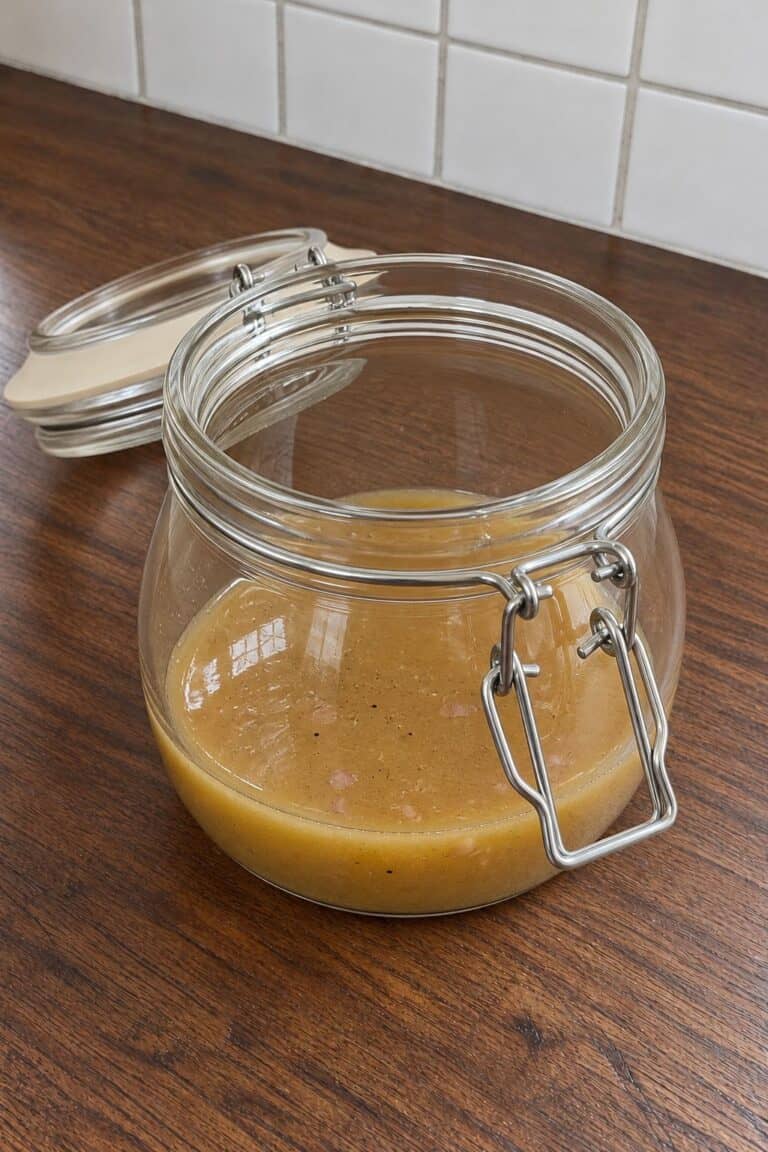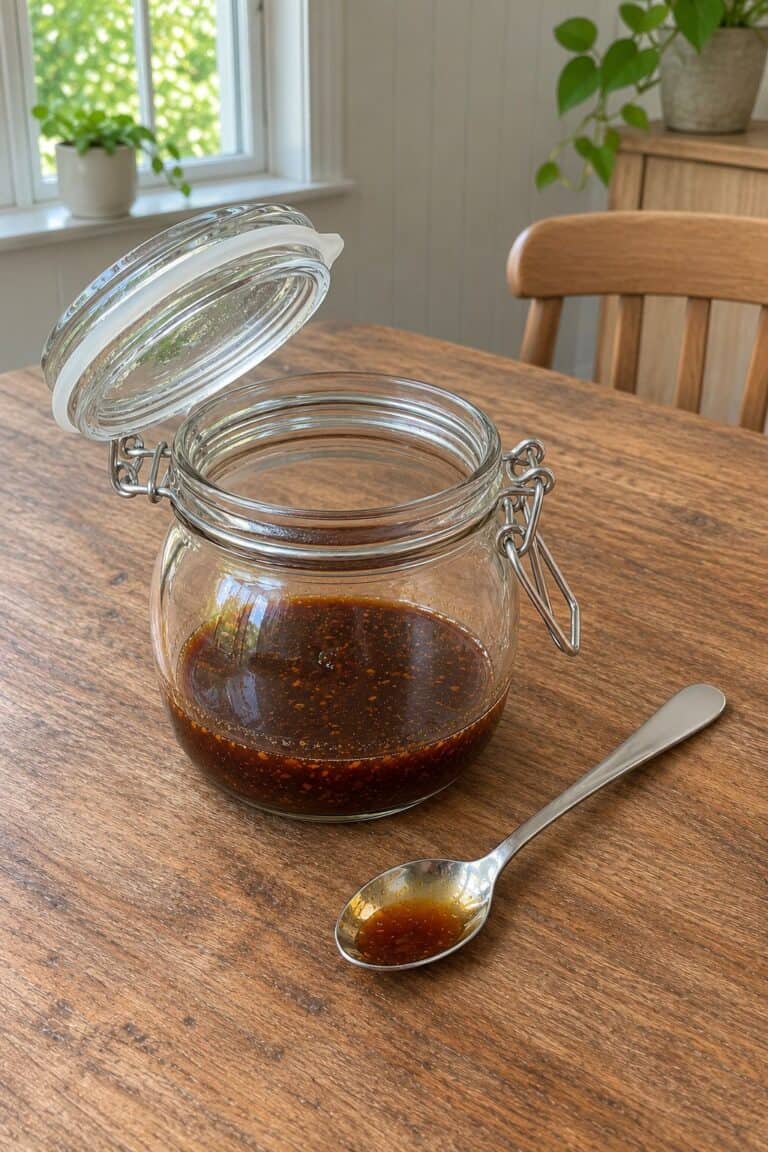
Capsicum chutney is a cooked South Indian-style bell pepper chutney made with capsicum, onion, tomato, dried chilies, toasted dal, tamarind, garlic, and ginger. Cook the vegetables until the raw pepper edge softens, blend with the dal and tamarind, then finish with a mustard seed and curry leaf tempering.
Capsicum chutney should be bright, savory, a little tangy, and thick enough to scoop with dosa or spoon onto rice. The pepper brings sweetness, but it needs toasted dal and tamarind to become a proper chutney instead of a blended pepper sauce.
This recipe uses red capsicum for color and sweetness, but green capsicum works if you want a sharper flavor. The key is cooking the capsicum long enough to lose its raw edge before blending. The tempering at the end is not decoration; it gives the chutney its finished South Indian flavor.

More South Indian-Style Sides
Cook the Capsicum Until the Raw Edge Leaves
Raw capsicum has a grassy bite that becomes obvious once blended. Cook it with onion and tomato until the pieces soften and smell sweet. You do not need to brown everything deeply, but the pepper should no longer taste raw.
Dal, Tamarind, and Chili Balance
Urad dal or chana dal gives body and a lightly nutty flavor. Tamarind keeps the chutney from tasting sweet and flat. Dried chilies bring heat, but they also add color and depth, especially when briefly toasted in oil.
The Tempering Makes It Taste Finished
Mustard seeds, curry leaves, and a little asafoetida turn a blended chutney into something that tastes complete. Pour the hot tempering over the chutney and stir just before serving.
Capsicum Chutney Recipe
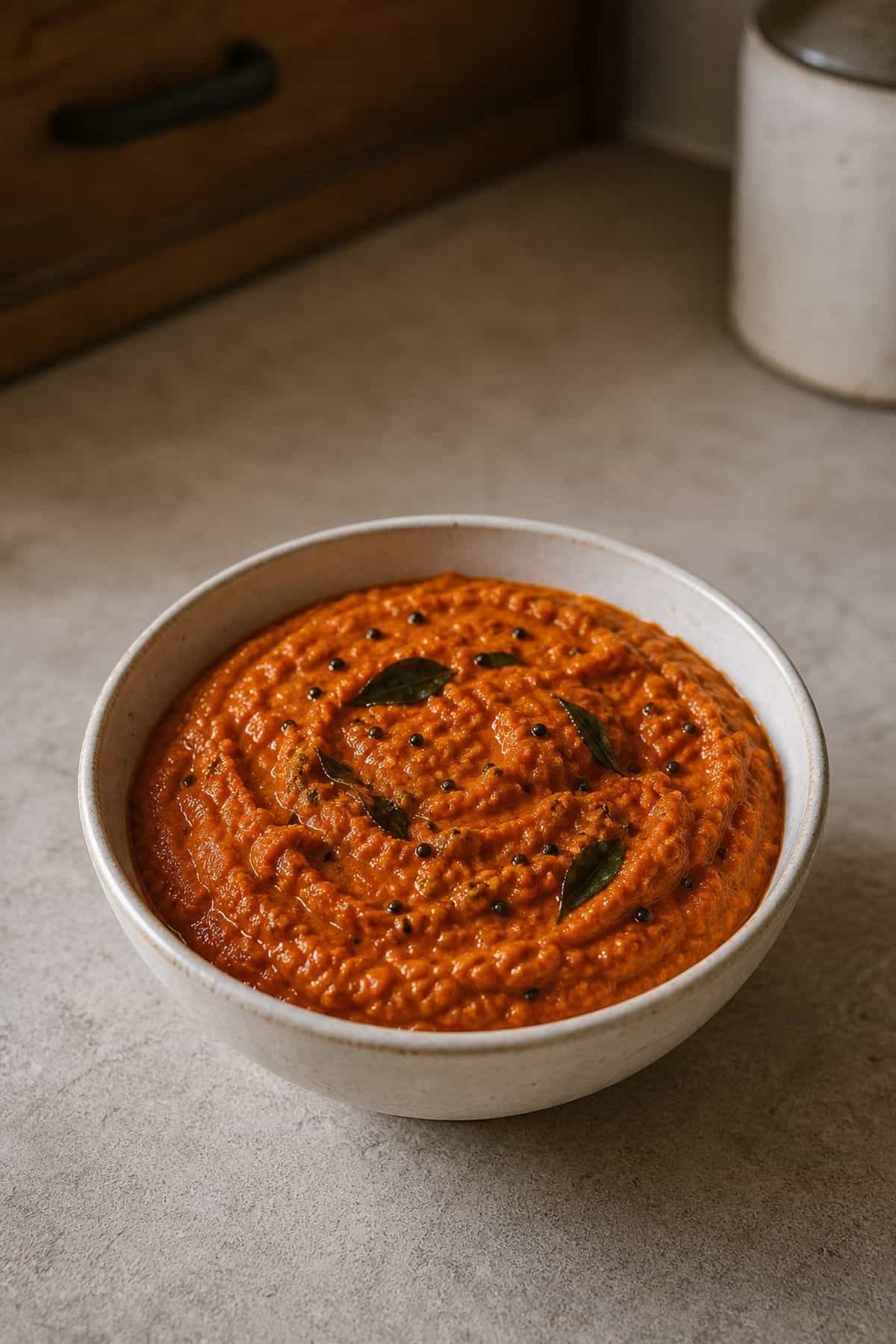
This makes about 1 1/2 cups of chutney.
Ingredients
- 1 tablespoon (15 ml) sesame oil or neutral oil
- 1 tablespoon (12 g) urad dal or chana dal
- 3 dried red chilies, adjusted to taste
- 1 small onion, chopped (about 100 g)
- 2 garlic cloves
- 1 teaspoon (5 g) chopped ginger
- 2 large red capsicums or bell peppers, chopped (about 300 g)
- 1 small tomato, chopped (about 100 g)
- 1 teaspoon (5 g) tamarind paste, or a small piece of soaked tamarind
- Salt to taste
- Water as needed for blending
- For tempering: 1 teaspoon (5 ml) oil, 1/2 teaspoon (2 g) mustard seeds, 6 curry leaves, pinch of asafoetida
Instructions
- Heat oil in a pan. Add urad dal or chana dal and dried chilies. Cook until the dal turns golden. Remove to a plate.
- In the same pan, add onion, garlic, and ginger. Cook until the onion softens.
- Add capsicum and tomato. Cook until the capsicum softens and the tomato breaks down.
- Cool the mixture for a few minutes.
- Blend the cooked vegetables with toasted dal, chilies, tamarind, salt, and just enough water to make a thick chutney.
- Transfer to a bowl. Heat oil for tempering, add mustard seeds, then curry leaves and asafoetida.
- Pour the tempering over the chutney and stir.
Notes
- Use red capsicum for a sweeter, brighter chutney.
- Use green capsicum for a sharper flavor, but cook it a little longer.
- For coconut capsicum chutney, blend in 1/4 cup fresh grated coconut and refrigerate leftovers promptly.
How to Adjust the Chutney
If it tastes too sweet
Add a little more tamarind or salt. Capsicum and tomato both bring sweetness, so the chutney needs enough sourness to balance.
If it is too thick
Blend in water one spoonful at a time. Chutney should be thick enough for dosa but loose enough to spoon.
Storage
Refrigerate for 3 to 4 days. If you add fresh coconut, use it within 2 days. Stir before serving because the chutney thickens as it sits.
Where This Chutney Works Best
Serve with dosa, idli, uttapam, rice, curd rice, sandwiches, wraps, or roasted vegetables. It is also good as a spread under fried eggs or as a quick sauce for grilled paneer.
How to Balance Capsicum Chutney
Good capsicum chutney needs three things working together: sweetness from the peppers, heat from the chilies, and tang from tamarind. If one of those is missing, the chutney tastes flat even when the texture is right.
If it tastes bitter, the dal or chilies may have browned too far. Add a little more tamarind and a pinch of sugar to round it out. If it tastes too sharp, cook the blended chutney for another minute so the raw edge softens.
The tempering should go in at the end while it is still sizzling. That hot oil carries the mustard seeds and curry leaves through the whole bowl, which is what makes the chutney taste finished instead of simply blended.
For more on the pepper itself, see what capsicum is.
Frequently Asked Questions
What is capsicum chutney?
Capsicum chutney is a cooked bell pepper chutney made with capsicum, aromatics, chilies, dal, tamarind, and tempering.
Can I make capsicum chutney without coconut?
Yes. This version is coconut-free and gets body from toasted dal.
Can I use green capsicum?
Yes. Green capsicum gives a sharper flavor. Cook it until the raw smell fades before blending.
How long does capsicum chutney keep?
It keeps for 3 to 4 days in the refrigerator. Coconut versions should be eaten sooner.
What do you eat with capsicum chutney?
It works with dosa, idli, rice, curd rice, sandwiches, wraps, and roasted vegetables.
Why is my chutney bitter?
The dal or dried chilies may have burned, or the capsicum may have been undercooked. Toast the dal only until golden and keep the heat moderate.
Key Takeaways
- Cook capsicum before blending so the chutney does not taste raw.
- Toasted dal gives body and nutty flavor.
- Tamarind balances the sweetness of red capsicum.
- Tempering with mustard seeds and curry leaves makes the chutney taste finished.
- Store coconut-free capsicum chutney for 3 to 4 days in the fridge.
Wrapping Up
Capsicum chutney is forgiving once the balance is right. If it tastes sweet, add tamarind. If it tastes flat, add salt. If it tastes raw, cook the vegetables longer next time. The best version tastes bright enough for breakfast and savory enough to sit next to rice at dinner.