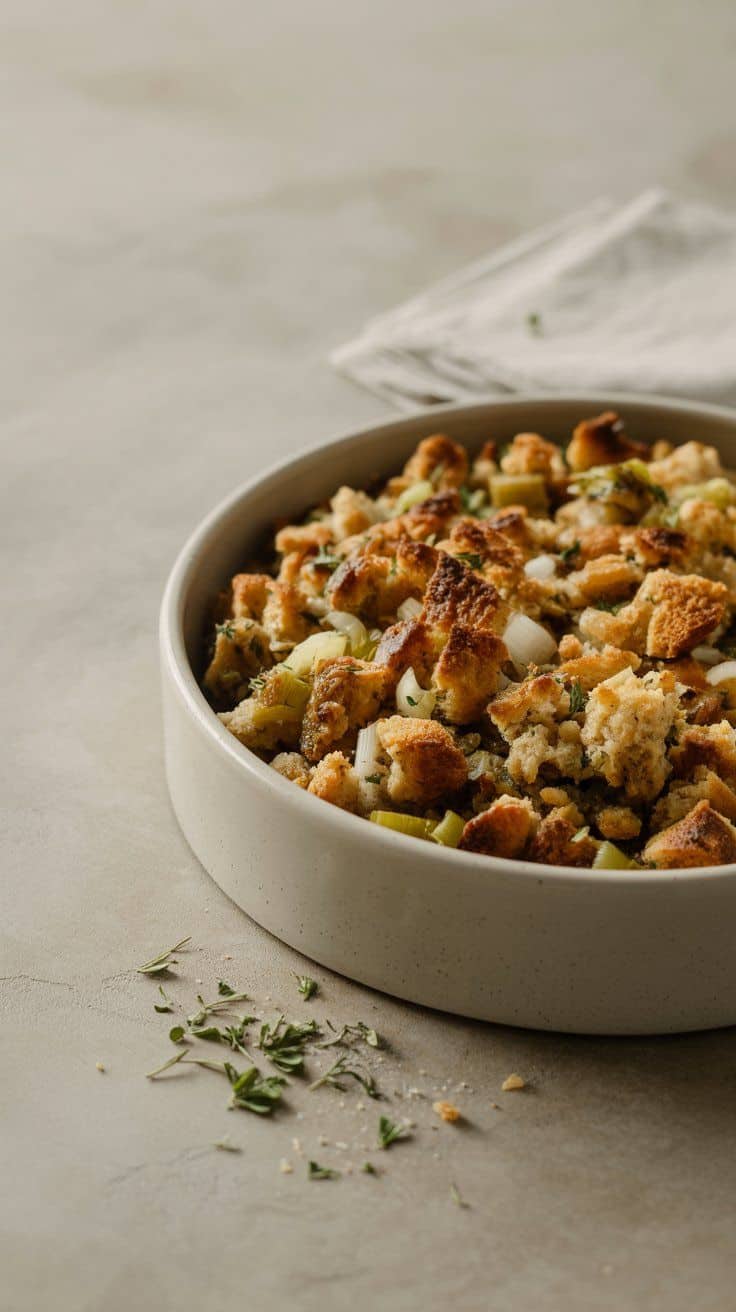
The best Friendsgiving dishes aren’t a long list of twelve recipes pulled from twelve different blogs. They’re five plates done well: one centerpiece, two or three supporting sides, a starter that anchors the first hour, and a sweet finish that earns its place. Eighteen dishes below sorted into those menu roles, with a host-versus-guest planning section and a make-ahead timeline so the table runs without the kitchen running the host into the ground.
Friendsgiving menus go wrong the same way every year. Twelve dishes get planned, three get over-ordered, two never make it out of the oven, and the host sits down forty minutes after everyone else. The eighteen below are sorted by the role each dish actually plays on the table, starters and sides and centerpiece and sweet finish, so the menu builds itself by picking one or two from each section instead of pulling at random.
Gear That Helps
Friendsgiving cooking spans dips, roasts, braises, baked desserts, and the assembly tray. The kit list isn’t long but it’s specific: a Dutch oven for the centerpiece braise or risotto, a cast iron skillet that goes from stovetop to oven for sides, a food processor for the dips and purees that anchor the starter spread, a stand mixer for the dessert that has to land, and a wooden board big enough to hold a charcuterie spread for ten.


Recommended Reads
- Friendsgiving Food Ideas
- Friendsgiving Dinner Party Food Ideas
- Friendsgiving Potluck Ideas
- Cheese and Charcuterie Board Recipe
- Autumn Sangria
How This List Is Organized
Most Friendsgiving roundups give you thirty-five recipes and leave you to figure out which one is the main, which one fills the plate, and which one carries the first hour. The list below sorts the table into three menu roles. Starters work the first hour while the kitchen finishes, when guests are arriving and the first drink is already in hand. The centerpiece plus supporting sides do the meal itself, with one main course and three or four vegetables and starches that build the plate around it. The sweet finish closes the night, ideally something that bakes ahead so dessert doesn’t compete with the rest of the kitchen.
Pick two starters, one centerpiece, three sides, and one or two sweet finishes. That gives you a coherent menu for ten without thirty open browser tabs. The planning section after the entries breaks down what to make if you’re hosting versus what to bring if you’re a guest, plus a make-ahead timeline so the morning of doesn’t run you ragged.
The Starters
The five dishes that work the first hour. Guests are arriving, the centerpiece is still in the oven, and the room needs something to graze on with the first drink. Pick two of these, not five, and let the spread breathe.
1. Cranberry-Brie Bites
Bite that everyone hopes is going to be on the table. Puff pastry, melted brie, and a spoonful of tart cranberry sauce in a muffin-tin format reads as Friendsgiving in one cube, and they hit the oven exactly when the first guest is unbuttoning a coat. The muffin tin matters because it locks each bite into a shape that travels from kitchen to living room without losing the cheese, and the cranberry component can be made forty-eight hours ahead so the morning prep is assembly only. Full recipe over here.
2. Cheese and Charcuterie Board
Anchors the entire first hour and asks nothing of the kitchen on the day. A working Friendsgiving board for ten runs three cheeses (one soft, one hard, one blue if the room will take it), two cured meats, two crackers, one bread, and the perimeter packed with grapes, dried apricots, candied pecans, fig jam, and cornichons. Build it on the largest wooden board you own at least an hour before guests arrive so the cheeses come up to temperature properly. Get the full method here.
3. Bacon-Wrapped Dates
Vanishing-act appetizer that always disappears first off whatever tray it lands on. Medjool dates pitted, stuffed with goat cheese or marcona almonds, wrapped in bacon and roasted until the bacon crisps and the date center turns into something nearly molten. They travel from oven to tray in five minutes and pair specifically well with the brown-spirits cocktail half the room is drinking before dinner. Assemble the wrapped dates the night before and roast them just before the doorbell starts. Recipe is here if you want it.
4. Butternut Squash Soup Shooters
Soup as an appetizer in espresso cups, which is one of those moves that reads as more effort than it actually is. A small cup of roasted butternut squash soup, a dot of crème fraîche, and a few toasted pumpkin seeds gives the first hour a warm bite that isn’t another piece of bread or cheese. Make the soup base three days before and reheat it in a saucepan on Friendsgiving morning, then portion into demitasse cups right before service. Full method here.
5. Deviled Eggs with Smoked Paprika
Underrated starter for a holiday spread because they don’t compete with anything else on the table. Cold-served, make-ahead, and the smoked paprika gives the filling enough depth to read as intentional rather than nostalgic. They go on a platter an hour before guests arrive and need zero kitchen attention through the first hour. Boil and peel the eggs the day before, hold the filling separately, and pipe right before guests sit down. Step-by-step is over here.
The Centerpiece and Supporting Sides
The main course architecture. One centerpiece, two or three sides, the plate that everyone takes their second drink to and sits down for. The centerpieces here trade out the obvious turkey for options that ask less of the kitchen and feed ten without a four-hour oven slot, and the sides cover the brassica, the root, and the green-vegetable slot of the plate.
6. Carnaroli Risotto
Vegetarian-friendly centerpiece for the Friendsgiving where the turkey conversation got old. Carnaroli (not arborio, the carnaroli has more bite) cooked with stock and finished with butter and parmesan turns into a hand-passed plate that reads as effort without being one. A pot of risotto for ten holds on low heat for fifteen minutes after the final ladle of stock, which means it can sit while the sides come together. Pair it with mushroom or with roasted squash for the seasonal anchor. Recipe right here.
7. Cod in Parsley Sauce
Lighter centerpiece for the friend who doesn’t want a heavy plate at the end of a heavy month. Cod fillets baked in a creamy parsley sauce land on the table in twenty minutes and pair with mashed potato, a vegetable side, and the cold-weather Riesling already in the room. It’s the centerpiece for the Friendsgiving of six to eight where seafood feels right and the turkey would have been overkill anyway. Full breakdown here.
8. Roasted Baby Cauliflower
Side that photographs. Whole baby cauliflowers brushed with butter and roasted on a sheet pan until the edges blacken and the cores go tender give the table the visual hit a plate of florets never does. They share oven space with whatever else is in there at the same temperature, and the platter holds well for the twenty minutes between plating and guests sitting down. Method’s here.
9. Celeriac Puree
Mash-potato alternative that earns the swap on a holiday table. Celeriac (the knobby root) roasted and pureed with butter and a splash of cream comes out silkier than mashed potato and tastes like a quieter, earthier version of it. It’s the side that quietly surprises a guest who’s never had celeriac, and it holds covered over a pot of simmering water for the last hour of the cook. Make the puree the day before and reheat slowly with a little extra cream. Full recipe is here.
10. Asian Cauliflower
Sharp, bright counter to the rest of a Friendsgiving spread that tends to lean buttery and sweet. Cauliflower florets seared and glazed with a soy-sesame-ginger pan sauce cuts through the heavy plate the way a pickled side does on a Korean barbecue table. Twenty minutes on the stovetop, no oven time, which solves a real problem on a day when the oven is doing everything else. Recipe over here.
11. Stuffed Mushrooms with Sausage and Cheese
Crosses over from starter to side and holds well on a warm tray on the table through the meal. Italian sausage browned with cream cheese and parmesan turns a cremini cap into a two-bite mini meal, and the format means they keep their shape from kitchen to plate. Stuff the caps the night before and bake the morning of so they hit room temperature warm. Here’s the full one.
12. Sweet Potato Rounds with Goat Cheese and Cranberries
Sweet-savory side that travels in a single layer on a sheet pan and assembles cold, which makes it the strongest contender for the friend showing up to your house with a contribution. Roasted sweet potato coins topped with a smear of goat cheese, dried cranberries, and a drizzle of honey reads as effort without asking for oven space at the host’s end. Make the rounds at home, assemble the toppings on arrival, no reheating needed. Recipe is over here.
13. Spinach and Artichoke Dip with Crackers
Crosses over from starter to table-side companion through the meal because once it’s hot, it’s hot for two hours. A baked spinach-artichoke dip with cream cheese and parmesan sits in the middle of the table and gets a dunk every time someone passes the bread. It’s the dish that gives the spread a center of gravity beyond the centerpiece itself. Mix the dip the morning of and bake during the last twenty minutes before guests sit down. Full recipe over here.
The Sweet Finish
Five desserts that close the meal. Pick one if you went heavy on the centerpiece, two if the table is the kind that lingers. All of them bake ahead so dessert doesn’t fight the rest of the kitchen at the end of the night.
14. Apple Sour Cream Slice
Fall on a plate, baked the night before, slices clean for ten. A buttery base, apples cooked down with cinnamon and a layer of sour cream custard that sets in the oven gives you a dessert that reads as a proper end to the meal without the slice-and-decorate fuss of a layer cake. Cut it cold and let the slices come to room temperature on the counter while dinner runs. Recipe right here.
15. Creme Bavarois
Dinner-party dessert that earns the French gasps. A vanilla bavarois set in a mold and turned out at the table is the move for a Friendsgiving where one of you wants to show off a little, and it’s almost entirely a fridge job (no oven). Make it the day before, unmold an hour out, serve with brandied cherries or a fresh fruit compote spooned over each slice. Step-by-step is over here.
16. Buckwheat Cookies
Understated finish for the friend who doesn’t want a big slice of cake at the end of a heavy meal. Buckwheat flour gives the cookie a nutty, slightly grassy depth that pairs with coffee and a glass of port after dinner, and they hold for a week in a tin so the leftovers earn their place too. Bake them three days ahead and the second-day cookies are quietly better than the first. Recipe is here if you want it.
17. Brandied Cherries Over Ice Cream
Pantry move dressed up as dessert. A jar of brandied cherries made weeks in advance gets spooned over good vanilla ice cream at the table, and the whole production takes thirty seconds per bowl. It’s the dessert for the host who didn’t have time to bake anything and wants to land with something that reads as deliberate. Make the cherries a month ahead. Full method here.
18. Tahini Hot Chocolate
Closing-down drink that doubles as dessert. A small mug of hot chocolate finished with a spoon of tahini gives the end of the night a sit-down moment without plates, and it lands at the cup-of-coffee-or-something-stronger junction where Friendsgivings tend to taper off. Make it in a saucepan after dessert, ladle into demitasse cups, send everyone home warm. Recipe over here.
The Friendsgiving Menu Build
The eighteen above turn into a working menu in two different ways depending on whether you’re the host or a guest. Each scenario has a different planning question, and the breakdown below answers both.
If You’re Hosting Ten Guests
Make one centerpiece, two or three sides, and one sweet finish. Assign the rest to guests. A working host menu for ten looks like one risotto or cod centerpiece, the celeriac puree as the starch, the roasted cauliflower as the vegetable, the asian cauliflower or kale as the green, plus the apple slice as dessert. Total active kitchen time spread across two days runs about five hours. Guests bring the two starters (cranberry brie bites, charcuterie board) and the second dessert.
If You’re a Guest Bringing One Dish
Bring something that travels and assembles cold or holds at room temperature. The sweet potato rounds, the cheese board, the deviled eggs, the bacon-wrapped dates assembled raw and finished in the host’s oven, the apple slice, or the buckwheat cookies all qualify. Skip anything that needs broiling, last-minute assembly, or reheating in someone else’s oven. The host’s oven is doing the centerpiece and three side dishes, and a guest dish that demands a slot is the dish that doesn’t get made.
Quantity per Guest
Plan three to four bites of appetizers per person, half a cup of each side dish (three sides total), five to six ounces of protein on the centerpiece, and one slice of dessert per guest plus a twenty-percent margin. For ten guests, that’s roughly thirty-five appetizer bites, three side bowls at five cups each, three pounds of centerpiece protein, and twelve dessert portions. The leftovers cover the next day’s lunches.
The Make-Ahead Timeline
Three days ahead: cranberry sauce, brandied cherries (or earlier), Christmas-day shopping, buckwheat cookies. Day before: charcuterie cheeses pulled to room temperature, deviled egg whites prepped, sweet potato rounds roasted and cooled, apple slice baked, celeriac puree made and refrigerated, bavarois set. Morning of: butternut squash soup reheated, stuffed mushrooms assembled, dip mixed and refrigerated. Two hours before: brie bites assembled in muffin tin, bacon-wrapped dates assembled raw. Thirty minutes out: brie bites in the oven, dip in the oven, centerpiece resting under foil, sides reheating on the stovetop or holding warm.
Frequently Asked Questions
How many dishes do I need for a Friendsgiving of ten guests?
Eight dishes is the working number for ten guests: two starters, one centerpiece, three sides, and one or two desserts. Anything above eight starts to compete for table space and oven slots, and at least three of the dishes will get under-eaten by guests who are full halfway through the spread. The host should personally make five or six of the eight and assign the rest.
What’s the best Friendsgiving dish to bring to a potluck?
Anything that travels at room temperature or cold and doesn’t need the host’s oven. The strongest contenders are the cheese and charcuterie board, the sweet potato rounds, deviled eggs, baked goods like the apple slice or buckwheat cookies, and bacon-wrapped dates assembled raw to finish in the host’s oven for fifteen minutes (one tray slot, no real ask). Skip soups, soufflés, and anything that needs a broiler finish.
Can I host Friendsgiving without a turkey?
Yes, and it’s often the better Friendsgiving for it. A carnaroli risotto, a baked cod, or a vegetable centerpiece like a whole-roasted celeriac all carry the table for ten without the four-hour oven commitment of a turkey. The risotto frees the oven entirely for the sides, the cod is a twenty-minute bake, and the celeriac shares oven space with three other dishes. Save the turkey for Thanksgiving with family if it matters there.
What should I prep the day before Friendsgiving?
The cranberry sauce, the celeriac puree, any baked dessert (apple slice, cookies), the bavarois, the soup base for the soup shooters, and the deviled egg whites and filling held separately. Roast the sweet potato rounds and let them cool. Pull the charcuterie cheeses an hour before guests arrive so they hit room temperature. Anything that uses cream, butter, or aromatics holds and reheats better the next day than fresh.
How do I avoid running out of oven space?
Plan the menu so no more than three dishes need oven time on the day. If the centerpiece is a risotto or a stovetop dish, the oven covers the brie bites, the cauliflower, and one other side. If the centerpiece needs the oven, pick stovetop or cold sides for the rest of the spread. The celeriac puree, the asian cauliflower, the deviled eggs, the charcuterie board, and the bavarois all skip the oven entirely.
Key Takeaways
- The best Friendsgiving menu has eight dishes total: two starters, one centerpiece, three sides, and one or two desserts.
- Sort the table by menu role (starter, centerpiece, side, sweet finish) instead of by recipe type, and the menu builds itself.
- Skip the turkey if the host wants to actually sit down. A risotto, a cod centerpiece, or a vegetable centerpiece carries ten without the four-hour roast.
- If you’re a guest, bring something that travels cold or at room temperature and doesn’t need the host’s oven.
- A three-day make-ahead timeline is the difference between a sat-down host and a kitchen-bound one.
Final Thoughts
A working Friendsgiving table is not the table with the most dishes. It’s the table where the host sits down with the rest of the room and stays for the second drink. Five plates done well beats twelve done at half attention, and the menu roles above are the working architecture: starter, centerpiece, supporting cast, sweet finish.
The leftovers from a properly planned Friendsgiving cover the next two days. Cold turkey or cod sandwiches, leftover risotto pressed into arancini, the cheese board picked at for breakfast, the apple slice eaten with coffee on the Sunday after. The meal earns its place for the week, not just the night.
If the host is up at midnight assembling brie bites for a ten AM start, the menu was too big. Cut a dish, assign a dish, or skip a course. The friends will not notice the missing dish; they will notice the host on edge. The eighteen above are sorted so the cut is easy.
Last update on 2026-10-14 / Affiliate links / Images from Amazon Product Advertising API